
How to prepare your bike for winter and where to store it
Before winter it is worth washing and drying your bike, lubricating the chain and putting it in a dry room where the temperature does not swing sharply. Keep an e-bike battery indoors, partly charged. It takes an hour and saves repairs in spring, because in winter the most damage is done not by the cold but by moisture and dirt left on the bike.
This guide is for those who ride rarely or not at all in winter: owners of city, road, gravel and electric bikes. If you will ride in winter too, there is a separate section on that below.
Short answer: what to do before winter
| Step | Why |
|---|---|
| Wash and dry it | Dirt and sand combined with moisture cause corrosion |
| Lubricate the chain | A thin film of lubricant protects the chain from rust |
| Inflate the tyres | A flat tyre left standing for a long time deforms |
| Choose a dry room | Temperature swings cause condensation |
| Keep the battery indoors | Cold and a full discharge shorten its life |
1. Wash and dry it
Wash the bike with lukewarm water, a cleaner made for bikes and a soft brush. Pay particular attention to the drivetrain, the chain and the brake areas, where most dirt builds up. Do not use a pressure washer: a strong jet forces water into the bearings and washes out their grease. On an e-bike this matters even more, because water can get into the connectors.
After washing, dry the bike with a dry cloth and leave it to dry. Turn the pedals and squeeze the brake levers a few times so that water drains from the drivetrain and the cable housings. You will find cleaning products in the cleaners category.
2. Lubricate the chain
Put a drop of lubricant on each link of the dry chain, turn the pedals and wipe off the excess. Before storage, the lubricant is not there to make the chain run smoothly, but so that a thin film protects the metal from rust. Too much lubricant is not worth it: it will only collect dust.
This is also a good time to check whether the chain has stretched, so that in spring you know whether it will need replacing. We explained how to do this in the article on chain wear. You will find chain lubricants in the lubricants category.
3. Where to store your bike
What matters most is not warmth but dryness and a steady temperature. When cold metal meets warmer air, moisture condenses on it, and that is where corrosion begins.
| Place | Suitable | What to watch for |
|---|---|---|
| Flat | Best | Not next to a radiator and not in direct sunlight |
| Dry storeroom | Suitable | Check that the walls do not get damp |
| Heated garage | Suitable | Keep it away from the car, which brings in snow and salt |
| Unheated garage | Possible | Clean and lubricate it well, and keep the battery elsewhere |
| Damp cellar | Not suitable | Damp causes corrosion even on a washed bike |
| Balcony | Not suitable | Rain, snow and constant temperature swings |
If you cover the bike, choose a breathable fabric cover rather than an airtight plastic sheet, under which moisture builds up. And if the bike stands in a shared stairwell or storeroom, it is worth locking it there too: we explained how in the article on locks.
4. Tyres: stand it or hang it
Before putting the bike away, inflate the tyres to the pressure shown on the tyre sidewall. There is no need to let the air out: a flat tyre left standing for a long time deforms where it touches the floor. Over the winter the tyres lose some air, so every few weeks it is worth topping them up with a pump.
- On the floor or a stand: the simplest option, and it also suits a heavy e-bike. Turn the wheels now and then.
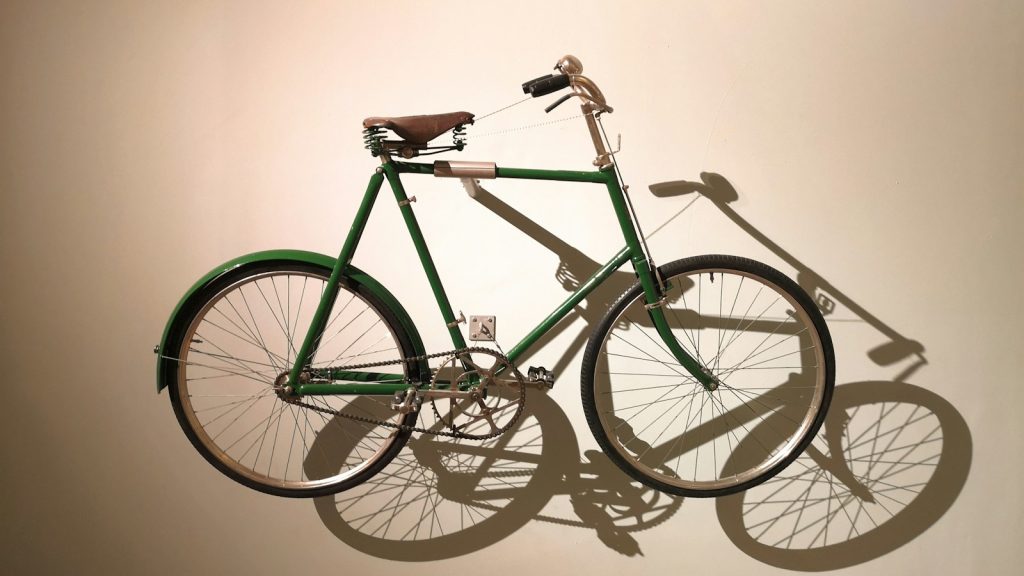
- Hung on a wall: saves space, and the tyres do not touch the floor. Fix the holder into masonry, not plasterboard, and do not hang the bike by thin frame tubes.
- Hydraulic brakes: if the bike hung vertically or stood upside down, squeeze the brake levers a few times before riding and make sure they are firm.
5. E-bike battery
The battery is the most sensitive part of an e-bike and the most expensive to replace. For example, for long storage Bosch recommends 30–60 % charge. Other manufacturers may say otherwise, so always check the manual for your bike.
- If the battery is removable, keep it at room temperature in a dry place.
- Do not charge the battery in the cold: bring it indoors and let it warm up before connecting the charger.
- Do not leave it connected to the charger all winter.
- Check the charge every few months and do not let it drop to zero, because a fully discharged battery may no longer charge.
6. If you will ride in winter too
In winter a bike suffers more from riding than from standing. Road salt eats away at the chain and the bolts, so after rides on salted roads it is worth washing and drying the bike and lubricating the chain more often. For safe riding the most important things are the tyres, in the dark the lights, and against mud and snow the mudguards.
7. What to check in spring
- Tyres: inflate them and check the sidewalls for cracks.
- Brakes: whether the levers are firm and the pads are not worn. We explained how to check this in the article on brake pads.
- Chain and drivetrain: clean, lubricate and check that the gears shift smoothly.
- Bolts: the handlebar, the saddle and the wheel quick releases must be tight.
- E-bike: charge the battery, inspect the connectors and go for a short ride.
When to bring it to the workshop
If in spring you hear creaking or rubbing, the brakes grip more weakly, the gears skip or an e-bike shows an error code, it is better not to put it off. It is also worth it if the bike stood in a damp place over winter. It is best to book a service early: in spring, once the season starts, the queues are longest. We wrote more about seasonal maintenance in the article on our workshop.
Frequently asked questions
Should I let the air out of the tyres for winter?
No. A flat tyre left standing for a long time deforms where it touches the floor. Keep the pressure shown on the tyre sidewall and top it up every few weeks.
Can I keep my bike on the balcony?
It is not recommended. On a balcony the bike is exposed to rain, snow and constant temperature swings, which make the metal parts rust. The best place is a dry room with a steady temperature: a flat, a storeroom or a heated garage.
How much should I charge an e-bike battery for winter?
Partly. For example, Bosch recommends 30–60 % charge for long storage, but other manufacturers may say otherwise, so check the manual for your bike. Keep the battery at room temperature and do not let the charge drop to zero.
Can I store my bike hanging on a wall?
Yes, it is even convenient, because the tyres do not touch the floor. Fix the holder into masonry and do not hang the bike by thin frame tubes. If the bike has hydraulic brakes, squeeze the brake levers a few times before riding.
Should I lubricate the chain before winter?
Yes. On a clean, dry chain a thin film of lubricant protects the metal from rust all winter. Wipe off the excess so it does not collect dust.
When is the best time to bring my bike in for a service?
Autumn or winter is best, while there are no queues. In spring, once the season starts, workshops are most in demand, so a bike sorted out in autumn will be ready to ride straight away in spring.
In short
Wash it, dry it, lubricate the chain, inflate the tyres and put the bike in a dry place with a steady temperature. Keep an e-bike battery indoors, partly charged. In spring it will be enough to check the tyres, brakes and chain, and if anything raises doubts, bring the bike to the workshop. Have questions? Call +370 625 93048.
Need help choosing?
Tell us your height, budget and where you ride, and we will pick a few models that genuinely suit you.