
Bike mudguards: how to choose them and whether they fit your bike
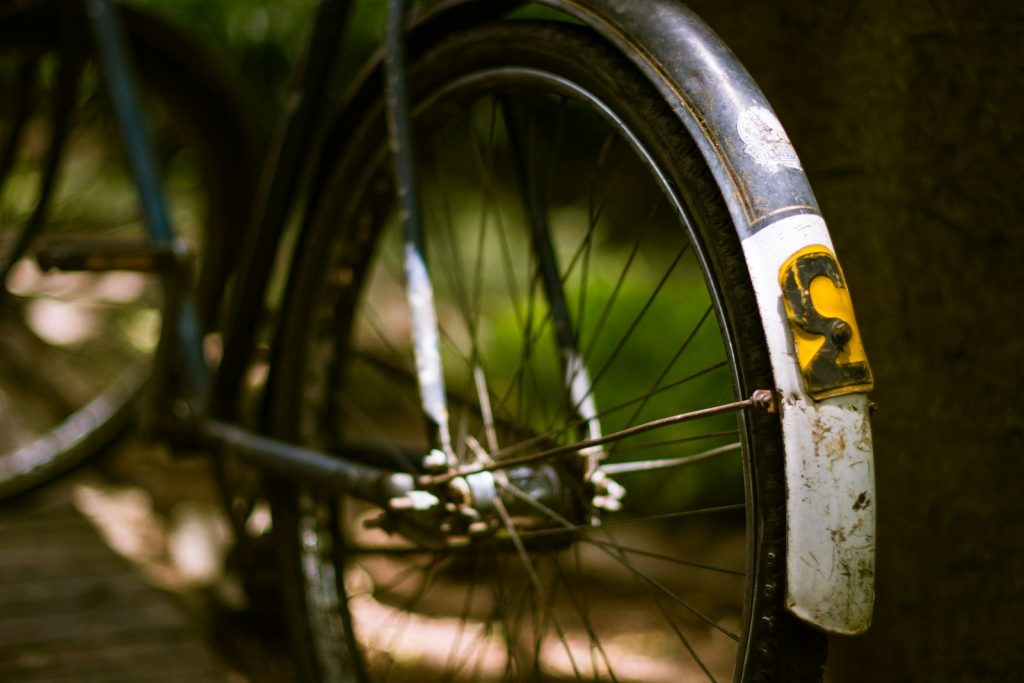
Bike mudguards stop the mud and water that the wheels throw upwards: the rear one protects your back, the saddle and the chain, and the front one your feet, the drivetrain and your face. For everyday riding in town in a wet autumn it is worth choosing a full mudguard set, while a sports bike without mounting eyelets suits clip-on mudguards, which go on in a few seconds.
Mudguards are also called fenders, so if you are looking for them, both words mean the same thing. This guide covers the types of mudguards, how to choose the size for your wheel and tyre, how to check whether they will fit your bike, and the most common mistakes when fitting them.
Short answer: which mudguards do you need?
| How you ride | Which mudguards | Price |
|---|---|---|
| Every day in town, to work or school | Full set with stays | from ~6 €, usually 25–35 € |
| Road or gravel bike without eyelets | Clip-on set | from ~6 € |
| Mountain bike, forest trails | Short front and a rear one on the saddle | from ~7 € |
| Children’s bike | Children’s 12–20″ set | from ~9 € |
1. What mudguards actually do
Mudguards are usually thought of only as a way to keep your back clean, but they also protect the bike itself. From the rear wheel, mud and sand fall straight onto the chain, the sprockets and the rear derailleur. Sand mixed with water works like a grinding paste, so the chain on a bike ridden without mudguards wears faster. We explained how to check this in the article on chain wear.
The front mudguard stops what the front wheel throws at your feet, onto the chainset and into your face. Without it, on a wet road it is not only your clothes that get dirty but the brakes too: on bikes with rim brakes, sand wears down the pads and the rim itself faster. We wrote more about brake wear in the article on brake pads.
2. Types of mudguards
| Type | How it is fitted | Advantages | Drawbacks |
|---|---|---|---|
| Full set | Bolted to the frame and fork eyelets, with wire stays | Protects best, holds firmly, does not rattle | Needs eyelets and time to fit |
| Clip-on | With rubber bands or straps to the frame, fork or saddle | Fits almost any bike, comes off in a few seconds | Covers less, can shift |
| Front only or rear only | Usually clip-on | Cheap, light, suits a mountain bike | Protects only one end |
Full sets (for example the SKS Bluemels or Velo series) are made for city, touring and everyday bikes. Clip-on mudguards (for example Ass Savers) are popular with owners of road and gravel bikes: they can be taken off on a dry day and put back on when the forecast promises rain.
3. How to choose the size
Mudguards are chosen by two things: the wheel diameter and the tyre width. The wheel size has to match: a 28-inch mudguard will not fit a 26-inch wheel, because its arc will be too large and the mudguard will hang far from the tyre. You will find the wheel size on the side of the tyre, and we explained how to read it in the article on tyres.
A guide for width: the mudguard should be roughly 10–15 mm wider than the tyre. This is not a standard but a rule of thumb: a mudguard that is too narrow lets mud past the sides, and one that is too wide may not fit between the frame tubes. Manufacturers usually give the mudguard width in millimetres in the product name.
- 28–29 inch mudguards: for adult city, gravel, road and mountain bikes;
- 12–20 inch mudguards: for children’s bikes;
- universal mudguards: fitted with rubber bands and suitable for various wheel sizes.
4. Will they fit your bike?
Before buying a full set, it is worth looking over your bike. Four things decide which mudguards will fit:
- Mounting eyelets. These are small threaded holes for a bolt near the rear axle and at the bottom of the fork. If there are some, a full set will fit. If there are none, choose clip-on mudguards.
- Clearance between tyre and frame. The mudguard has to fit between the tyre and the frame or fork with room left for mud. Too little clearance is the most common reason a mudguard rubs the tyre.
- Disc brakes. The brake caliper on the left side can get in the way of the stays. Some sets have separate mounts for disc brakes, so check the description.
- Suspension fork. A full front mudguard is not usually fitted to one. Mountain bikes use short front mudguards fixed to the fork arch.
5. Fitting and the most common mistakes
You can fit clip-on mudguards yourself in a few minutes. A full set can also be fitted at home, but it takes hex keys, patience and careful adjustment of the stay length. The most common mistakes:
- The mudguard rattles. Usually loose bolts or stays that are too long. Tighten the bolts and shorten the stays so the mudguard does not vibrate.
- The mudguard rubs the tyre. It is not centred or it sits too close to the tyre. Adjust the stay length so the gap is even along the whole arc.
- Everything worked loose after the first few kilometres. This is normal: after the first rides it is worth tightening the bolts again.
- Mud still splashes onto your feet. The front mudguard is too short. A longer mudguard or an extension with a rubber flap at the bottom helps.
If you would rather not bother, or you are not sure the mudguards will fit, bring your bike to our workshop in Vilnius: we will check which ones suit it and fit them on the spot.
Frequently asked questions
Does a bike need mudguards?
If you ride every day and not only in dry weather, yes. Mudguards protect not only your clothes but also the chain, drivetrain and brakes from mud and sand, so these parts wear more slowly. For sport on a dry day you can do without them.
What is the difference between a full mudguard set and clip-on mudguards?
A full set is bolted to the frame and fork eyelets, protects best and does not rattle, but the bike has to have eyelets. Clip-on mudguards are held by rubber bands or straps, fit almost any bike and come off in a few seconds, but they cover less.
How do I choose the mudguard size?
By the wheel diameter and the tyre width. The wheel size has to match the mudguard, for example a 28-inch wheel needs a 28-inch mudguard. A guide for width: the mudguard roughly 10–15 mm wider than the tyre.
Can I fit mudguards if my bike has no eyelets?
Yes. Clip-on mudguards are made for such bikes: they are held by rubber bands or straps to the frame, fork or saddle and need no eyelets.
How much do bike mudguards cost?
The cheapest mudguards cost from around 6 €. A single front mudguard usually costs about 14 €, a rear one about 21 €, and a good full set for an everyday bike 25–35 €.
Why does my mudguard rub the tyre?
Most often because the mudguard is not centred or sits too close to the tyre, or because there is too little room between the tyre and the frame. Adjust the stay length so the gap is even along the whole arc, and if there is not enough room, choose a narrower mudguard.
In short
For an everyday bike a full mudguard set is best, and for a sports bike without eyelets a clip-on one. Choose by wheel size and tyre width, and check the eyelets and clearance before buying. Mudguards cost a few euros and save the chain, drivetrain and brakes, which without them wear considerably faster in a wet autumn. And to stay visible in autumn too, do not forget lights.
Need help choosing?
Tell us your height, budget and where you ride, and we will pick a few models that genuinely suit you.