
When to replace bike brake pads: the signs, how to check and the cost
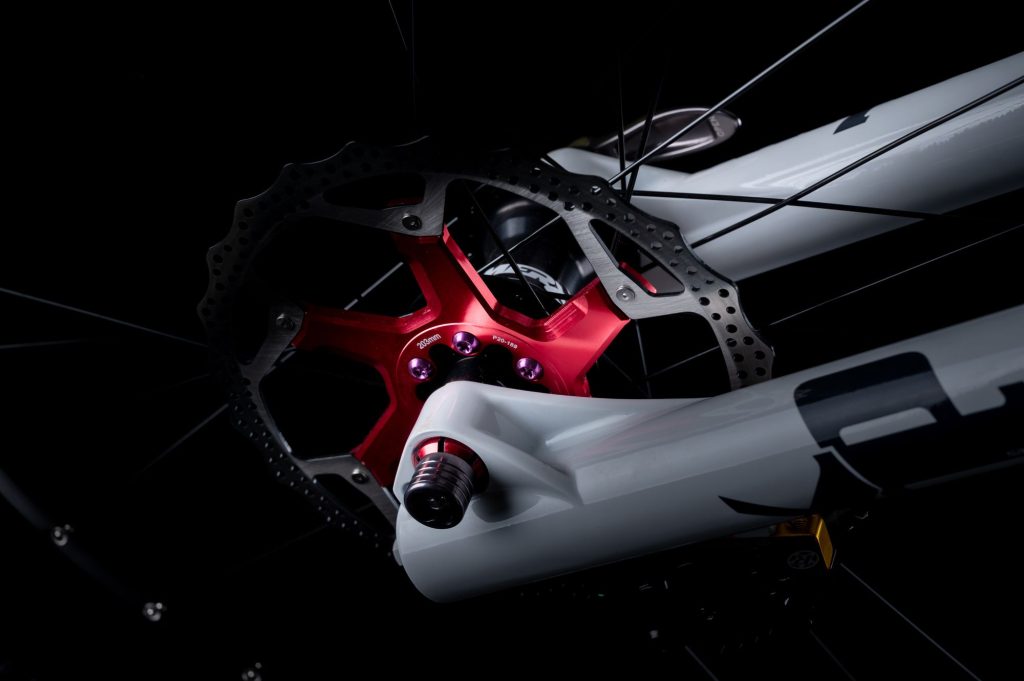
Bike brake pads need replacing when the friction material has worn almost down to the metal backing. Manufacturers usually give a figure of roughly 0,5 mm of material left. The exact limit is in your brake manual. Disc brake pads last on average 1 000–3 000 km, but in wet, muddy conditions they wear several times faster.
The brakes are the one system on a bike whose failure you notice too late. Unlike a snapped chain or a puncture, worn pads do not make riding harder: the bike rolls as usual, and only the stopping distance quietly grows. This guide explains how to spot wear without tools, how to check the pads and the rotor, and when replacing the pads alone is enough.
The short answer: when to replace brake pads
How you check depends on the type of brake. On discs you look at the thickness of the friction material; on V-brakes, at the wear grooves.
| Brake type | How to check | When to replace |
| Disc (D-brake) | Through the caliper with a torch | About 0.5 mm of friction material left |
| V-brake pads | With the naked eye, on the rim | The wear grooves have disappeared |
| Drum and internal brakes | At the workshop, once stripped | To the manufacturer’s limit |
The main rule: pads are replaced in pairs, and on one wheel at a time. A new pad on one side and a worn one on the other brakes unevenly, and the caliper works crooked.
1. Signs you can spot without tools
Worn pads almost always announce themselves through noise or through lever travel. The most common signs:
- A metallic scraping or grinding is the most dangerous sign. The friction material is gone and the metal backing is rubbing the rotor;
- the lever reaches the bar or has to be pulled much further than before;
- the stopping distance has grown, the bike stops more slowly even though you pull the same;
- squealing, particularly in the wet or in the first few metres after standing overnight;
- vibration or pulsing while braking, usually because the rotor is bent or has worn unevenly.
Squealing does not always mean wear: it is often caused by oil or chain spray on the rotor. In that case clean the rotor with isopropyl alcohol rather than replacing the pads straight away.
2. How to check pad thickness
Disc brakes
Disc brake pads are easiest to inspect without removing the wheel: shine a torch down through the gap in the caliper. You will see the two pads with the rotor between them.
Judged by only the friction material, the darker layer on the metal backing. When about 0.5 mm is left (thinner than the card of a matchbox), it is time to replace them. If in doubt, take the pads out and compare them with new ones: the difference is obvious.
V-brakes and rim brakes
V-brake pads have wear grooves cut into them. While the grooves are still visible the pad is fine; once the surface is smooth, replace it. You can check this by eye, without taking anything apart.
Look at the rim at the same time: if its braking surface has become concave, or the manufacturer’s wear indicator is showing, the rim is near the end of its life too, and new pads alone will not solve the problem.
3. The rotor wears too
About the brake rotor is often forgotten, even though it wears along with the pads. The minimum permitted thickness is engraved on the rotor itself, usually next to the marking “MIN.TH”. Go by the figure on your own rotor rather than a general rule: manufacturers set different limits.
The rotor needs replacing when it is thinner than the stated limit, bent beyond truing, or scored with deep grooves. Two things matter when buying one: mounting type (Center Lock or 6-bolt) and the diameter (usually 160, 180 or 203 mm), which has to match the old one.
4. Organic or sintered pads?
Disc brake pads are classified by the composition of the friction material, and the choice really does change how braking feels.
| Organic (resin) | Sintered (metallic) | |
| Braking power when cold | Higher | Needs to warm up |
| Noise | Quieter | Squeals more often |
| Wet and muddy conditions | Wears quickly | Lasts longer |
| Who it suits | For town, for dry weather | For autumn, off-road and e-bikes |
The practical conclusion: if you ride all year round, or you have an e-bike, sintered pads pay for themselves, because they take more load and do not wear out in a single wet month. For gentle city riding in dry weather, organic pads are enough.
5. Why this matters right now
A wet road changes braking more than most people expect. On a wet rotor or rim the first few metres of braking essentially wipe the water off, and the real braking force only arrives after that. The stopping distance grows, so you have to react earlier.
The difference is starkest with V-brakes: they act directly on the wet rim, so they lag the most. Discs lose less in the wet, but worn pads cancel that advantage out.
In autumn mud and grit join in: they act like sandpaper and wear the pads several times faster than a dry summer does. So a check that was enough once a season in spring is now worth doing monthly. While you are at it, look over the chain ir tyres as well.
Frequently asked questions
How do you know brake pads are worn?
The clearest signs: a metallic scrape when braking, the lever reaching the bar, a longer stopping distance. On disc brakes at least about 0.5 mm of friction material should remain; on V-brake pads the wear grooves should still be visible. A metallic noise means replace them immediately, because the rotor is being damaged too.
Why do bike brakes squeal?
The most common cause is oil or chain spray on the rotor; clean the rotor with isopropyl alcohol. Squealing is also caused by damp, mud, new pads that have not bedded in yet, or sintered pads, which squeal more by nature. If you also hear a metallic grinding, the pads are already worn out.
Can you replace just the pads and keep the rotor?
Yes, as long as the rotor is still thicker than the minimum engraved on it, is not bent, and has no deep grooves. A rotor lasts longer than pads, and is usually outlived by several sets. It does have to be replaced if the pads wore down to the metal and scored the surface.
How much does it cost to replace brake pads?
V-brake pads start at about €3 and disc brake pads at €5, with most people choosing around €15. A rotor costs about €36. At the Aštunkė workshop in Vilnius diagnostics costs €10, brake adjustment from €5, and a brake fluid change from €15.
Organic or sintered pads: which are better?
There is no universal answer. Organic pads bite harder from cold and are quieter, which suits the city and dry weather. Sintered pads last longer in wet, muddy conditions and take more load, which suits autumn, off-road riding and e-bikes, but they squeal more often and need to warm up.
How often do brake pads need replacing?
Disc brake pads last 1,000-3,000 km on average, but the figure depends heavily on conditions: in wet, muddy weather they wear several times faster than in a dry summer. During the riding season it is worth inspecting them about once a month, and more often in autumn.
In short: the check takes a minute
Brake pads are a cheap part whose wear costs disproportionately much: ridden down to the metal they ruin the rotor, and at worst they lengthen your stopping distance exactly when you can least afford it.
Shine a torch through the caliper, or check whether the grooves on the V-brake pads are still visible. It takes less than a minute. If you are not sure what you are looking at, bring the bike to the Aštunkė workshop in Vilnius: we will assess the pads and rotors, adjust the brakes, and tell you whether new pads alone will do. We wrote more about seasonal servicing in a separate article.
📍 Daugėliškio g. 32A-133, Vilnius
🕙 I–V 10:00–19:00
Need help choosing?
Tell us your height, budget and where you ride, and we will pick a few models that genuinely suit you.