
Cycling to school: what your child needs in September
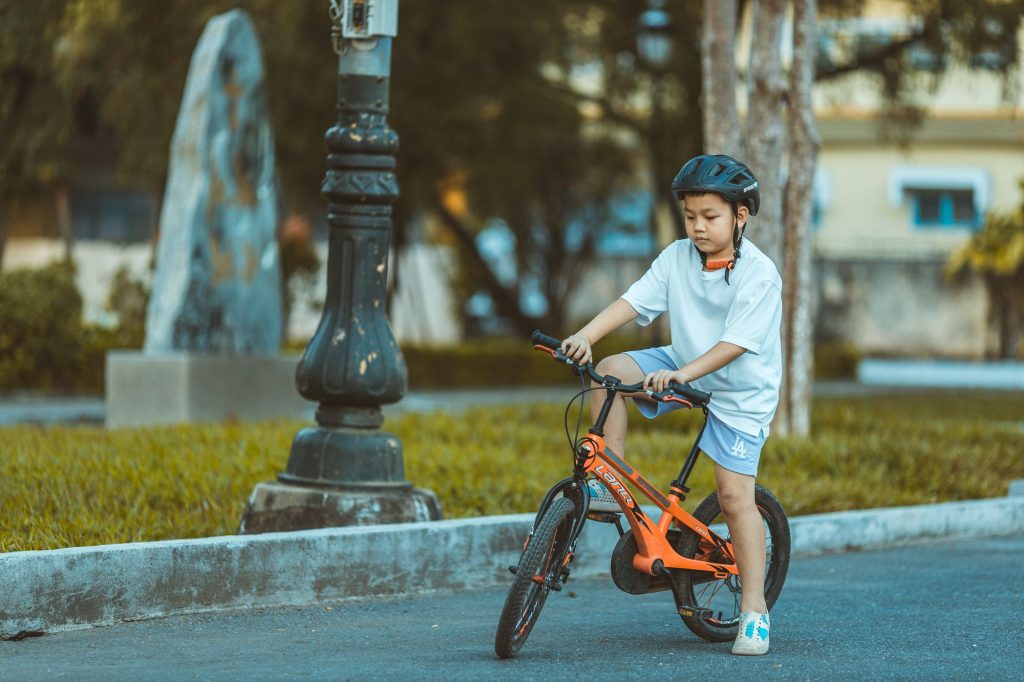
Cycling to school works from about 7 or 8 years old, provided the child handles the bike confidently, can brake, and understands road signs. What matters most is not the bike itself but three things: the right wheel size for their height, a helmet ir lights. It gets dark earlier in September, so being seen matters as much as the condition of the bike.
The start of the school year is the right moment to check whether your child’s bike still fits, how it survived the summer, and what is missing for safe riding. This guide sets out everything worth sorting before those first trips to school.
The short answer: what size bike does a child need?
Children’s bikes are sized by wheel diameter in inches, not by frame size. The main criterion is the child’s height, not their age: children of the same age can differ by 15-20 cm.
| Child’s height | Approximate age | Wheel size |
| 105–120 cm | 4–6 m. | 16″ |
| 120–135 cm | 6–8 m. | 20″ |
| 135–150 cm | 8–11 m. | 24″ |
| from 150 cm | 11 years and older | 26″ or an adult frame |
The basic rule: sitting on the saddle, the child should reach the ground with the toes of both feet. If they can put both feet down flat and their knees are sharply bent, the bike is already too small.
We covered measuring in more detail in a separate guide: bike size by height.
1. Is your child ready to cycle to school?
Handling a bike and riding in traffic are two different skills. Before letting a child ride alone, check whether they can:
- set off and stop confidently without putting a foot down early;
- ride straight one-handed in order to signal a turn;
- look over their shoulder without veering sideways;
- understand the main signs and traffic lights;
- know the route and its most dangerous points.
A practical tip: ride the route together at least two or three times at the weekend, at the same time of day your child will be going to school. That way you see the real traffic and the tricky junctions.
Before letting your child out on the road, check the current Road Traffic Regulations, which set out from what age and on which parts of the road a child may ride alone.
2. The safety kit you need
Helmet
A helmet is the one item you cannot skip. Children’s helmets costs from 19 €, with most people choosing one around €30.
Three things matter when choosing: the helmet has to fit snugly (shake your head and it should not move), cover the forehead rather than sit pushed back, and carry the CE EN 1078 marking. Helmet size is chosen by head circumference in centimetres, not by age. After a heavy impact a helmet must be replaced, even if you cannot see any cracks.
Lights
In September the sun sets in Vilnius at about 19:50, and by early October before 19:00. The trip home in the afternoon often happens at dusk, so lights become essential: white at the front, red at the back.
USB rechargeable lights suit children best: there are no batteries to change, and most come off in one movement and go into a backpack. Prices start at 3 €, and a good set costs about €18. Use the flashing mode, which is seen better than a constant one.
A bell and visible clothing
Bell costs only a few euros, but on shared paths it matters more than it looks, because it warns pedestrians before you get too close. Reflective details on the backpack or jacket help too: in the dark a driver spots a bright child much sooner.
3. Getting the bike ready after summer
A bike covers most of its kilometres over the summer, and then goes into daily use in September. Before the school year, work through this list:
- Brakes: are the pads worn, does the lever reach the bar;
- Tyres: pressure and tread; soft tyres are the most common cause of punctures (how to choose tyres);
- Chain: is it rusty, has it stretched (when to replace a chain);
- Saddle height: children grow over the summer, and often raising it is all that is needed;
- Wheels: is there sideways play, are all the spokes tight.
If the bike stood in a shed or on a balcony all summer, it is worth having it checked professionally; we wrote more about that seasonal servicing article.
4. Where to leave the bike at school
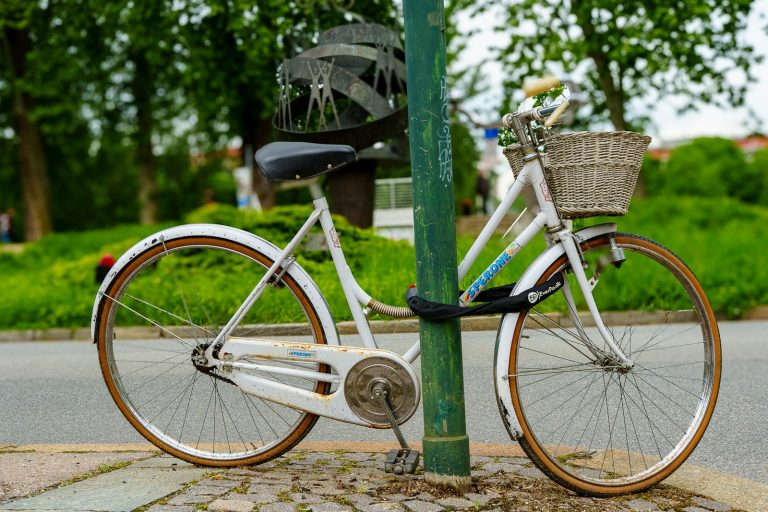
A bike stands at school for six to eight hours, so the lock has to be a serious one. Thin coil locks are cut in seconds, so a child is better served by a U-lock or a thicker chain with a cover.
Teach your child to lock up properly: the lock has to join the frame and the stand, not just the wheel. If only the front wheel is secured, removing it leaves the bike to the thief. Choose a visible, well-lit spot as close to the entrance as possible, and keep a photo of the bike and its frame number on your phone; they will help if you ever have to go to the police.
Frequently asked questions
From what age can a child cycle to school?
Usually from 7 or 8, but what decides it is skill and the route rather than age. The child has to brake confidently, ride straight one-handed and understand road signs. A quiet route on a cycle path works earlier than a road with heavy traffic. Before letting them ride alone, check the current Road Traffic Regulations.
What size bike should you buy for a 7-year-old?
Usually 20 inch wheels, if the child is 120-135 cm tall. But choose by height rather than age: 7-year-olds can differ by 15-20 cm. Check that they can reach the ground with their toes while sitting on the saddle.
Can you buy a bike to grow into?
By one size at most. A child cannot control a bike that is too big: the brake levers are harder to reach and getting off in an emergency stop is harder. It is safer to buy the right size and replace it in two years than to ride something oversized all that time.
How much does a children’s bike cost?
16 inch bikes start at about €200, 20 inch at €220 and 24 inch at €330. Add a helmet (from €19) and lights (from €3). Dearer models usually have a lighter frame and better brakes, and a lighter bike is noticeably easier for a child.
Does a child need lights if they cycle to school in the morning?
Yes. September mornings are light, but the ride home after lessons or clubs is often at dusk, and in October it is dark before 19:00. Lights are needed both ways: white at the front, red at the rear.
How do you choose the right size children’s helmet?
By head circumference: measure with a tape about 1 cm above the eyebrows and ears. Compare the figure in centimetres with the manufacturer’s chart. The helmet should fit firmly (shake your head and it should not move) and cover the forehead. Look for the CE EN 1078 marking.
In short: size, helmet, lights
Getting ready for September comes down to three points. Size: check whether your child has outgrown the bike over the summer. Helmet: the right size and carrying the CE EN 1078 marking. Lights: white at the front, red at the rear, because it gets dark earlier in September.
If you are unsure about the condition or the size of the bike, bring it to the Aštunkė workshop in Vilnius: we will check the brakes, gears and wheels, set the saddle height, and tell you whether the bike still fits. Diagnostics costs €10.
📍 Daugėliškio g. 32A-133, Vilnius
🕙 I–V 10:00–19:00
Need help choosing?
Tell us your height, budget and where you ride, and we will pick a few models that genuinely suit you.